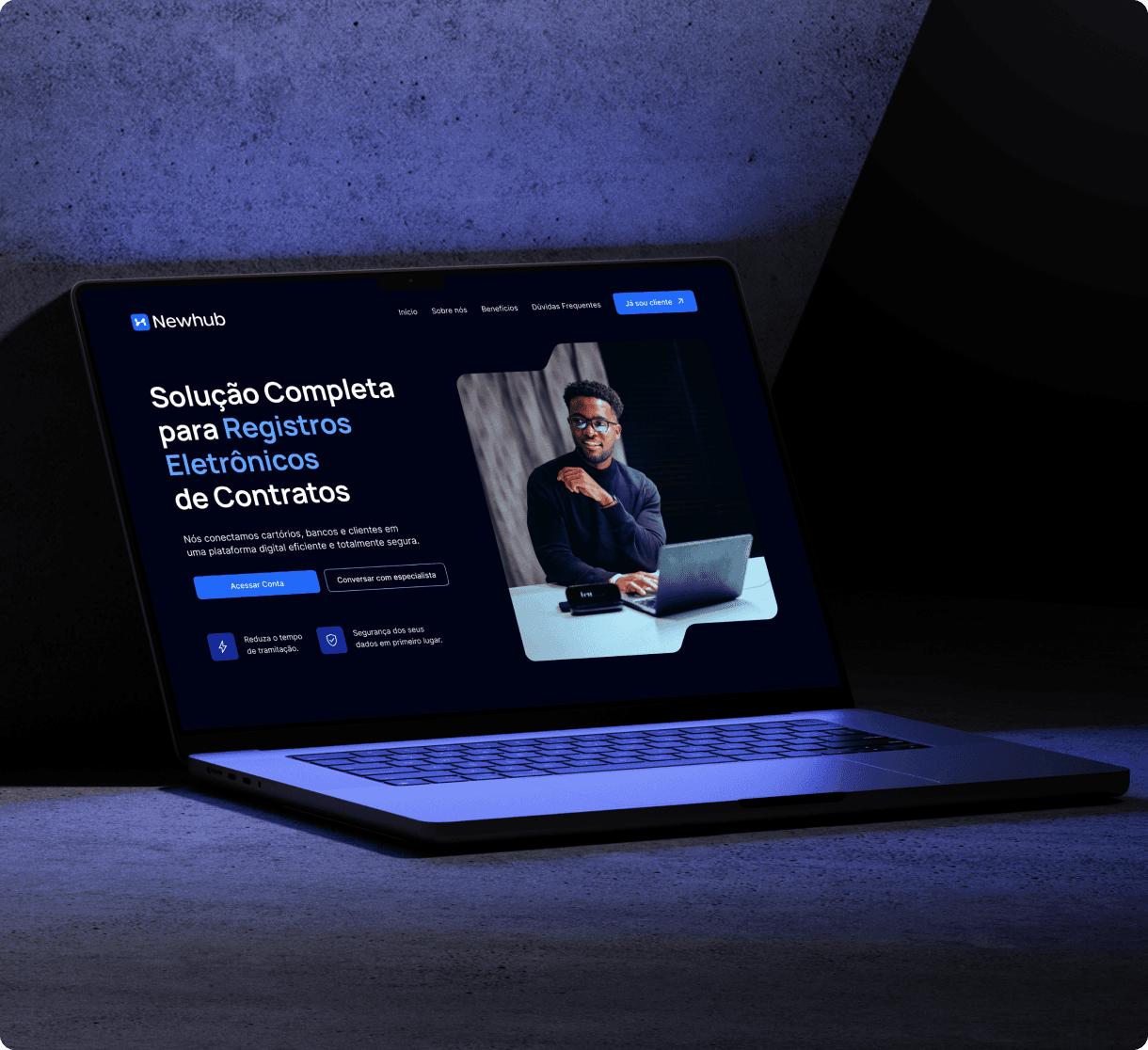
A digital platform for Electronic Contract Registration, connecting notaries, banks, and clients through a secure and user-friendly system.
Industry:
As the sole designer on the Newhub project, I was responsible for leading the design process from research to MVP delivery. My responsibilities included:
Conducting in-depth research based on the client's (Caixa Econômica Federal) and ONR requirements.
Developing wireframes, prototypes, and high-fidelity designs.
Creating and maintaining a Design System.
Collaborating closely with both front-end and back-end developers to ensure design feasibility.
Conducting usability tests and visual validations throughout the development cycle.
Regularly presenting progress and receiving feedback from stakeholders to ensure alignment.
Problem & Solution
Problem
The market for electronic contract registration lacked a unified, secure, and user-friendly solution to manage the varying demands of stakeholders. Existing systems like REGDOC were inefficient, difficult to use, and suffered from technical debt due to fragmented development. This led to long processing times, lack of transparency, and a poor user experience.
Solution
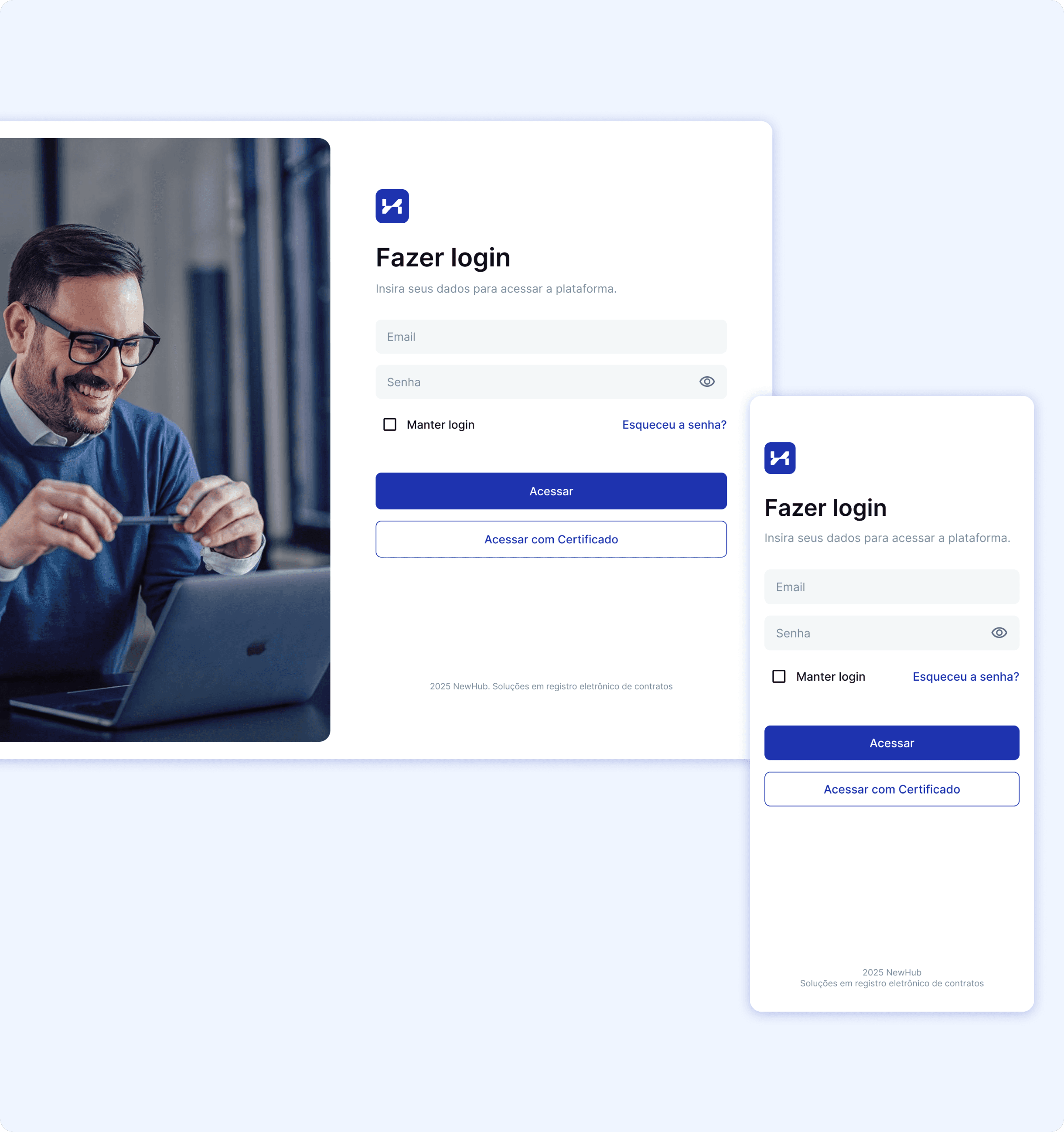
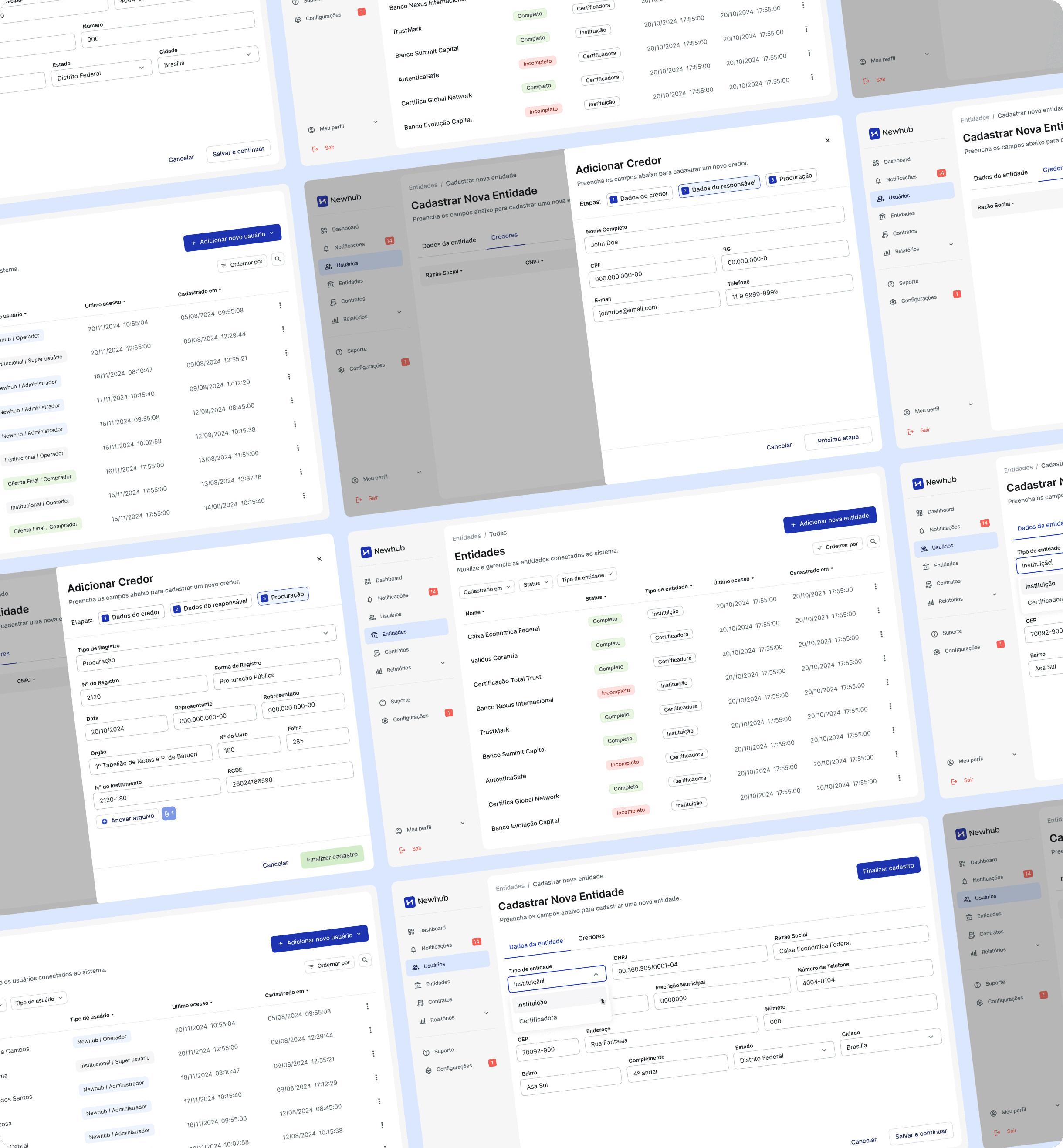
Newhub was developed as a centralized platform tailored to the specific needs of users such as Caixa Econômica Federal, end clients, and support teams. The platform addresses issues such as regulatory compliance, security, and the need for more efficient contract management processes. Key goals were:
Streamlining workflows and eliminating inefficiencies.
Enabling seamless access to contracts from anywhere, at any time.
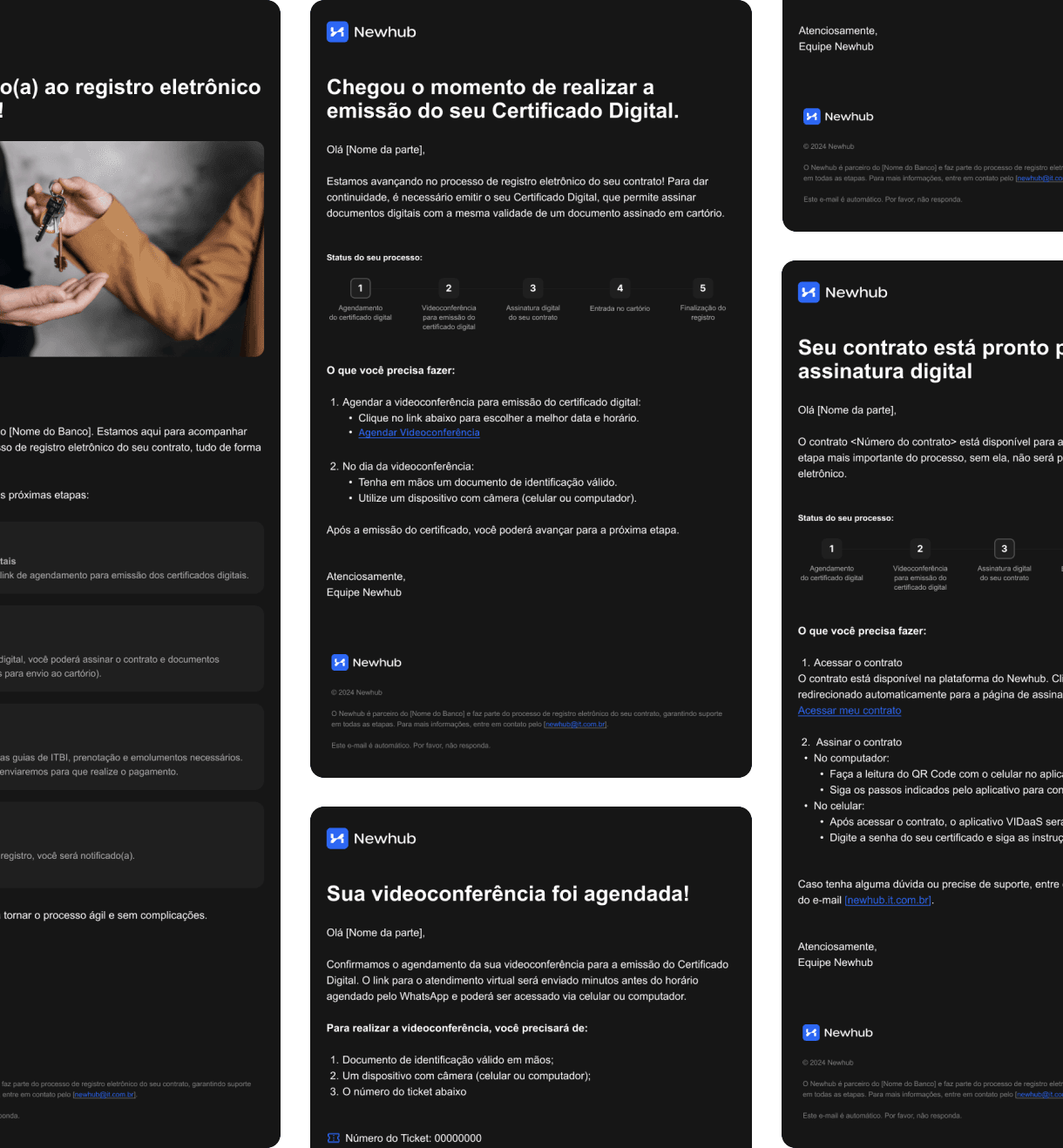
Providing transparency with real-time status updates on contract processes.
Enhancing user confidence through secure, in-platform digital signatures.
Multidisciplinary Team
The Newhub project relied on a multidisciplinary team that played a crucial role in ensuring the project’s success. Key team members included PM, PO, Engineers, DevOps, QA, DBA, Solutions Architect and External Stakeholders.
Methodologies and Tools Used
I adopted an Agile approach, ensuring iterative development and continuous feedback from stakeholders to achieve efficient delivery.
Methodology: Weekly sprints to prioritize tasks, ensuring we met deadlines and adjusted to evolving requirements.
Tools: Figma, Figjam, Jira, Microsoft Teams, Illustrator and Photoshop.
Research & Insights
We conducted comprehensive research to understand the existing workflows and identify key pain points in the previous system (REGDOC). The insights guided the design and development of Newhub. Key findings included:
Faster digital signatures were essential for reducing process completion time.
A lack of centralized tools for managing multiple contracts, which hindered efficiency.
The system needed a clear and simple interface, as users ranged from non-technical staff to highly technical stakeholders.
The need for real-time status updates throughout the contract lifecycle to improve visibility and reduce customer queries.
And more... These insights directly influenced design decisions, ensuring that Newhub met the specific needs of its users while addressing the shortcomings of the previous system.
Challenges
The project faced several key challenges, which we were able to overcome through collaboration and efficient problem-solving:
Tight deadline: The MVP had to be delivered in just four months.
Managing multiple stakeholders: Regular communication and feedback sessions were critical for aligning expectations.
Regulatory compliance: The system had to comply with Caixa Econômica Federal’s specific requirements and Brazilian legal standards (ONR - National Operator of the Electronic Property Registration System).
Diverse user profiles: Ensuring the system was usable for both technical and non-technical users required a careful design approach that balanced simplicity and functionality.
Results & Impact
The Newhub MVP was delivered in just four months, meeting a very tight deadline and giving the team a solid foundation to build on. Even after I moved on to a new opportunity, the work we delivered continued to generate strong results:
Process efficiency increased significantly, reducing contract formalization time by 63%.
High adoption among clients and internal teams, thanks to an intuitive and responsive experience.
A scalable structure, with a design system and core flows that made it easier to grow and add new features later.
The product has continued to evolve based on user feedback, which was exactly the intention from the start, a living platform that keeps improving over time.
I’m proud of the groundwork I helped build. It set the stage for future iterations and allowed the team to continue improving the product with confidence.
Post-Launch Strategy & Metrics
Even though the MVP of Newhub was delivered under a very tight deadline and without the chance to run usability tests beforehand, I defined a set of metrics I would track after launch to understand how the platform was performing in real use. My goal was simple: see how people were actually interacting with the product and use that to guide the next iterations.
So I would start by looking at the basics: Are users completing onboarding? How long do they take to perform core actions? Which features are naturally adopted, and where do they drop off? These points alone already help paint a clear picture of usability.
Some of the first metrics I’d monitor include:
onboarding completion rate
task completion time
feature adoption
drop-off points in key flows
Beyond numbers, I also value listening to users. Collecting CSAT, CES, and quick qualitative feedback from banking teams, support staff, and end users helps uncover details that quantitative metrics alone can miss. Small comments often lead to meaningful improvements.
With this combination of insights, I can prioritize improvements more strategically: refining flows with high drop-off, optimizing components in the design system, proposing A/B tests for critical steps, and aligning the roadmap with the rest of the team based on real impact. In the end, the goal is simple: to evolve the product based on evidence, not assumptions.
The work presented here features only a segment of the project, aimed at protecting sensitive information belonging to the client or the company being showcased.
